PostcardFrom Shibuya Crossing
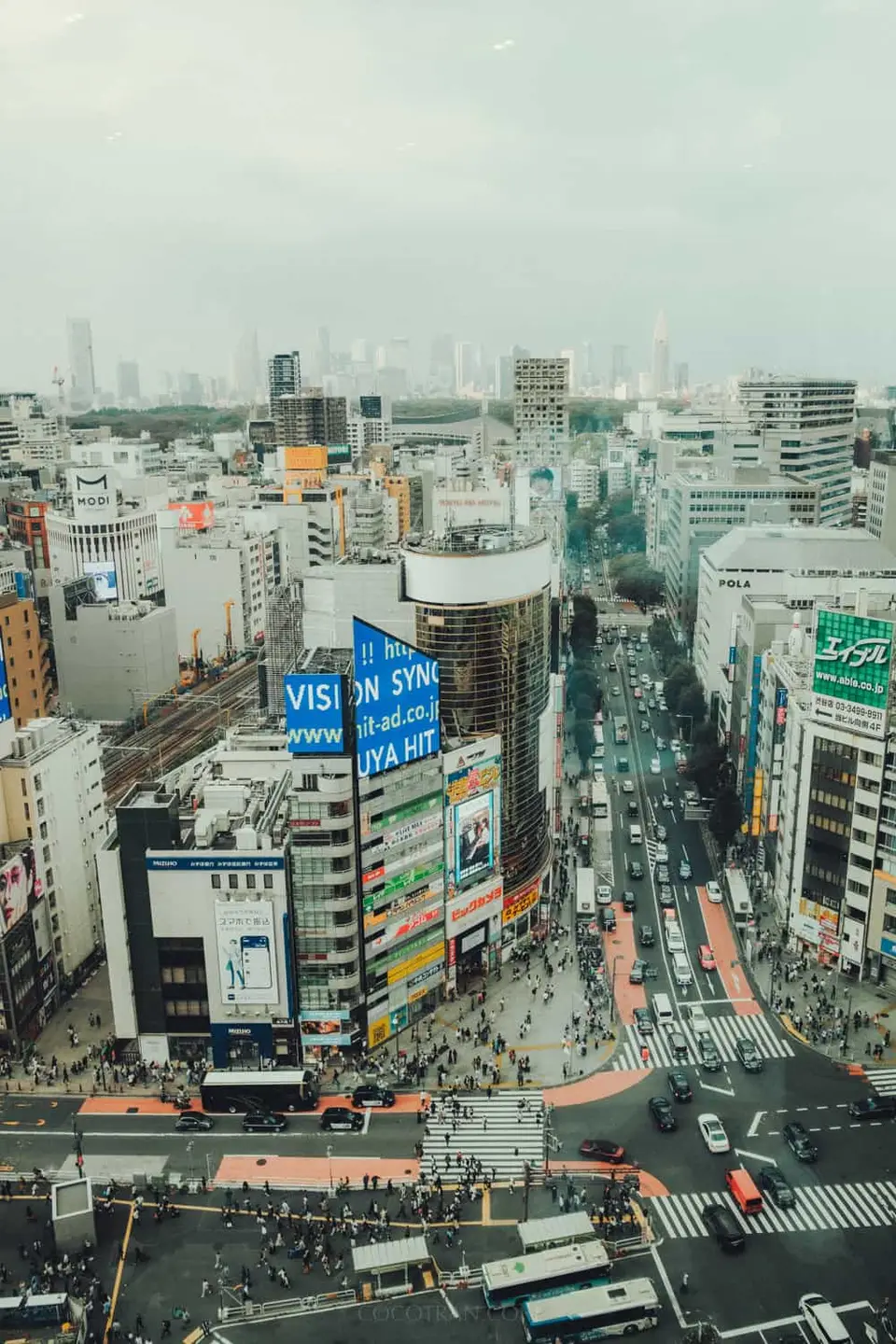
Up to three thousand people cross at once, every couple of minutes, and not one of them collides. It's the most watchable thing in Tokyo, and yet almost everybody films it from the one place it doesn't work.
- Photos & words by
- Coco Tran
The short answer
Up to three thousand people cross at once, every couple of minutes, and nobody collides, and honestly it's the most watchable thing in Tokyo. The catch is that almost everybody films it from the one place it doesn't work, because height flattens it. You want to be in it, or just above it, at that hour when the lights are on but the sky is still blue.
At a glance
- Setting
- The famous scramble crossing outside Shibuya Station, Tokyo, at its busiest in the early evening
- Best for
- Photographers, and anyone who wants the famous shot without wasting an evening on the wrong vantage point
- Standout
- Blue hour, when the signage is lit but the sky still has that lovely colour in it
- Consider
- The high viewing decks flatten the whole thing, so you'll want angles much lower than you'd expect
- Stayed
- Japan, most recently October 2024
Travelled in Japan, most recently October 2024. Hotels here can be booked through Coco Tran Travel. How we review.
The takeaway
Shibuya Scramble is exactly what it sounds like: every light goes red at once and people pour across in every direction, diagonals included. Estimates run to somewhere around 2,500 to 3,000 people in a single change at peak, and well north of half a million a day, but the number isn't what makes it magic. What makes it magic is that nobody bumps into anybody. Several thousand people read each other's trajectories, adjust by a few centimetres, and the whole thing resolves in about forty-five seconds, and then it does it all again. I've stood and watched it for half an hour and been completely, happily content.
Here's the one thing worth knowing: it only reads from above. Everyone's instinct is to film from inside the crossing, which gets you a lovely video of the backs of strangers, but get up a little higher and the whole choreography appears beneath you.
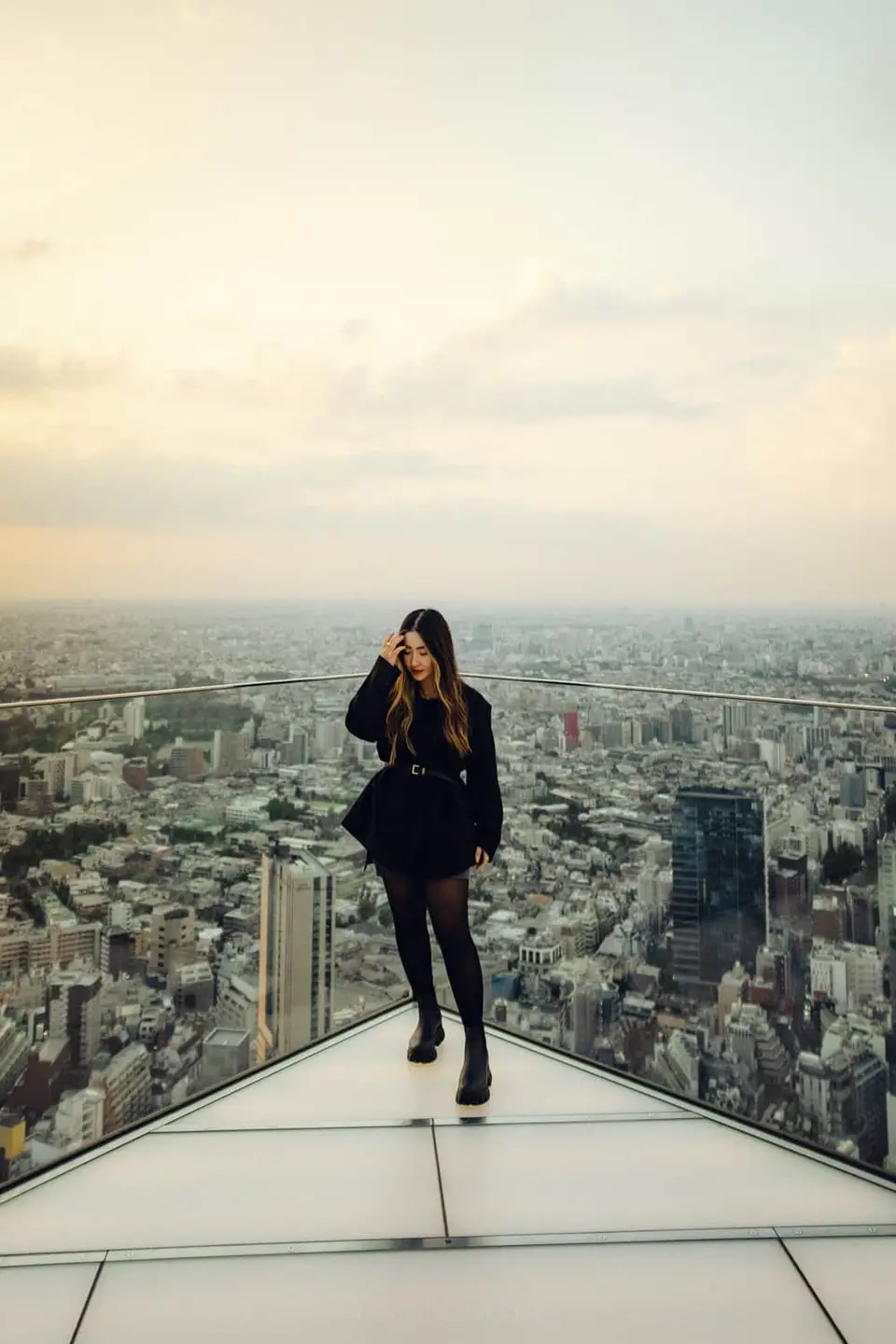
Three places to watch from. The Starbucks in Tsutaya on the corner is the famous one: second floor, glass wall, so buy a coffee and wait your turn for a window seat. Shibuya Sky, the open-air roof on the forty-seventh floor of Scramble Square, is spectacular for the whole city, but it sits too high to read the crossing itself. And then there's my favourite, which most people walk straight past: Mag's Park on the roof of Magnet by 109, directly above the junction and low enough to see faces, with a small fee and a fraction of the queue. Trust me on this one.
When to go. Come in the early evening from about six, when the screens are lit and the commuters are out, because that's the version you've got in your head. And if it rains, count yourself lucky, since rain is a gift here rather than a setback: umbrellas from above are the shot. Then, for the complete opposite, come back at six in the morning, when the same junction is nearly empty and one street cleaner is working his way around it. Doing both, I promise you, is the whole experience.
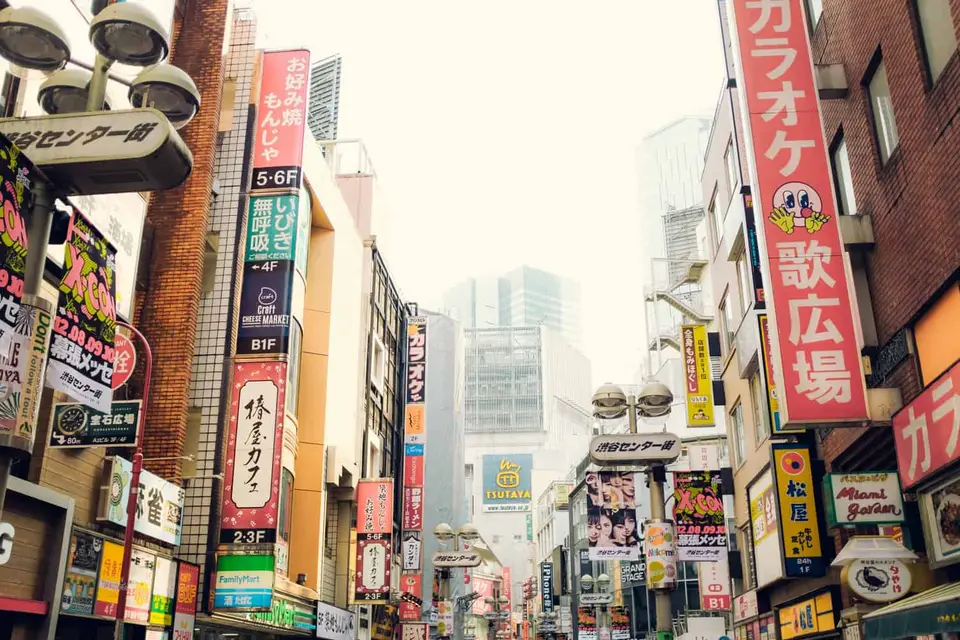
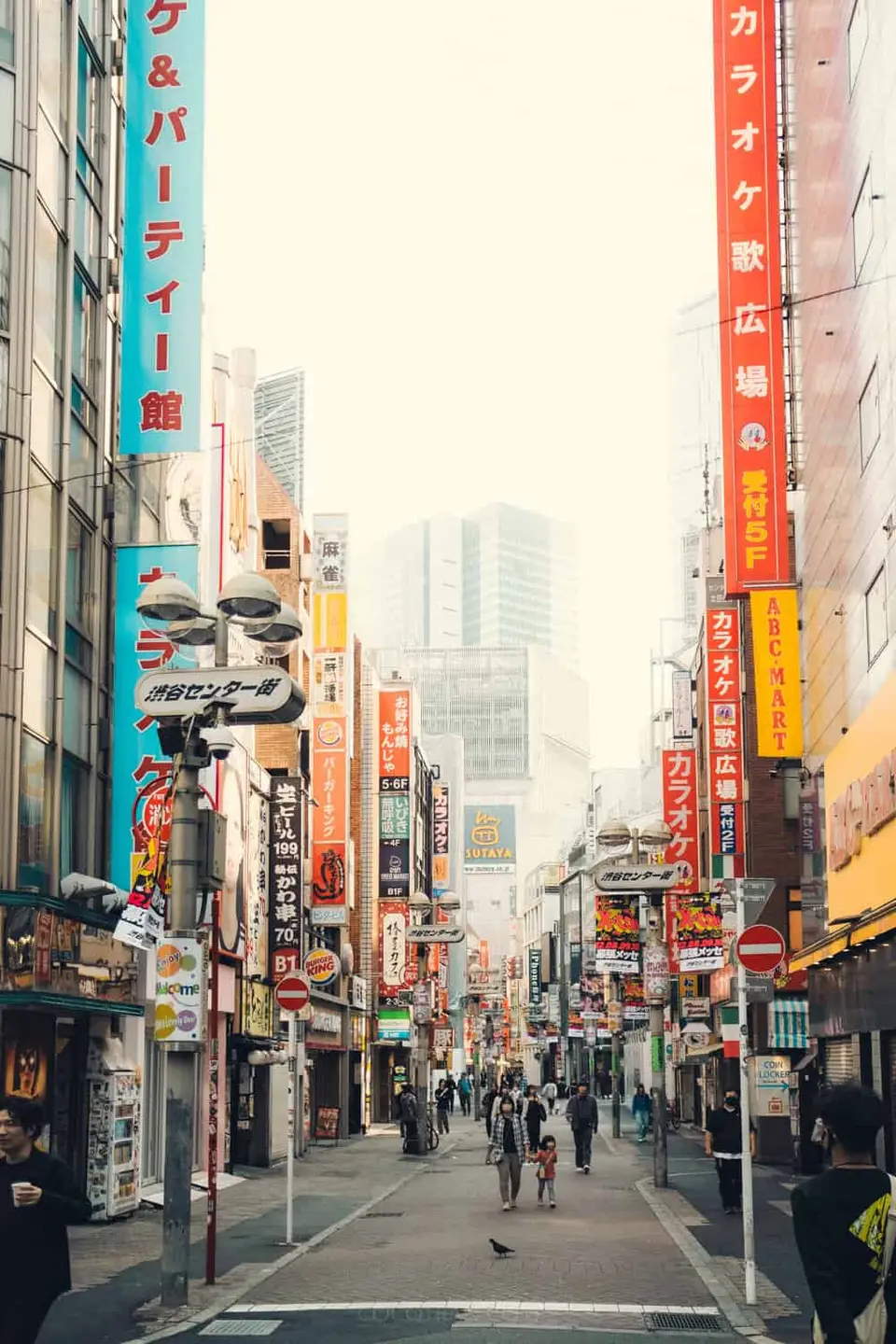
While you're there. Say hello to the Hachiko statue on the station side, the dog who came to meet his owner every day for nine years after the man had died, and who's now where all of Tokyo says they'll meet. Then slip into Nonbei Yokocho, two lanes of tiny post-war bars tucked up against the railway, ninety seconds away and about sixty years back in time. And there's Center Gai if you want the full volume.
Afterwards, walk fifteen minutes to Nakameguro or into Yoyogi Park and feel the noise drop away around you. That contrast, more than the crossing itself, is the thing I really hope you notice.