CalósWhere I'd have you swim on Mallorca’s southeast coast
- Photos & words by
- Coco Tran
The short answer
Cala s’Almunia is the cove I would choose over its famous neighbour, Caló des Moro: no sand, whitewashed fishermen’s huts and steps into deep, clear water. Both are on Mallorca’s southeast coast near Santanyí, well away from Palma’s city beaches, and the famous one has a queue by ten, so go at eight or in May or October.
At a glance
- Setting
- A hand-picked shortlist of Mallorca's dreamiest hidden coves — the calas where the water goes impossibly blue
- Best for
- Swimmers, sunseekers and anyone who loves chasing the perfect secret beach
- Standout
- Turquoise coves tucked beneath the cliffs, a few with a little seafood shack at the end of the walk
- Consider
- The best ones take a walk or a boat to reach, so go early for parking and that just-you magic
- Last visit
- Mallorca, May 2024 — La Residencia
Stayed at La Residencia, Mallorca, May 2024. Hotels here can be booked through Coco Tran Travel. How we review.
The water really is that colour, I promise. The only trouble is that everybody now knows it.
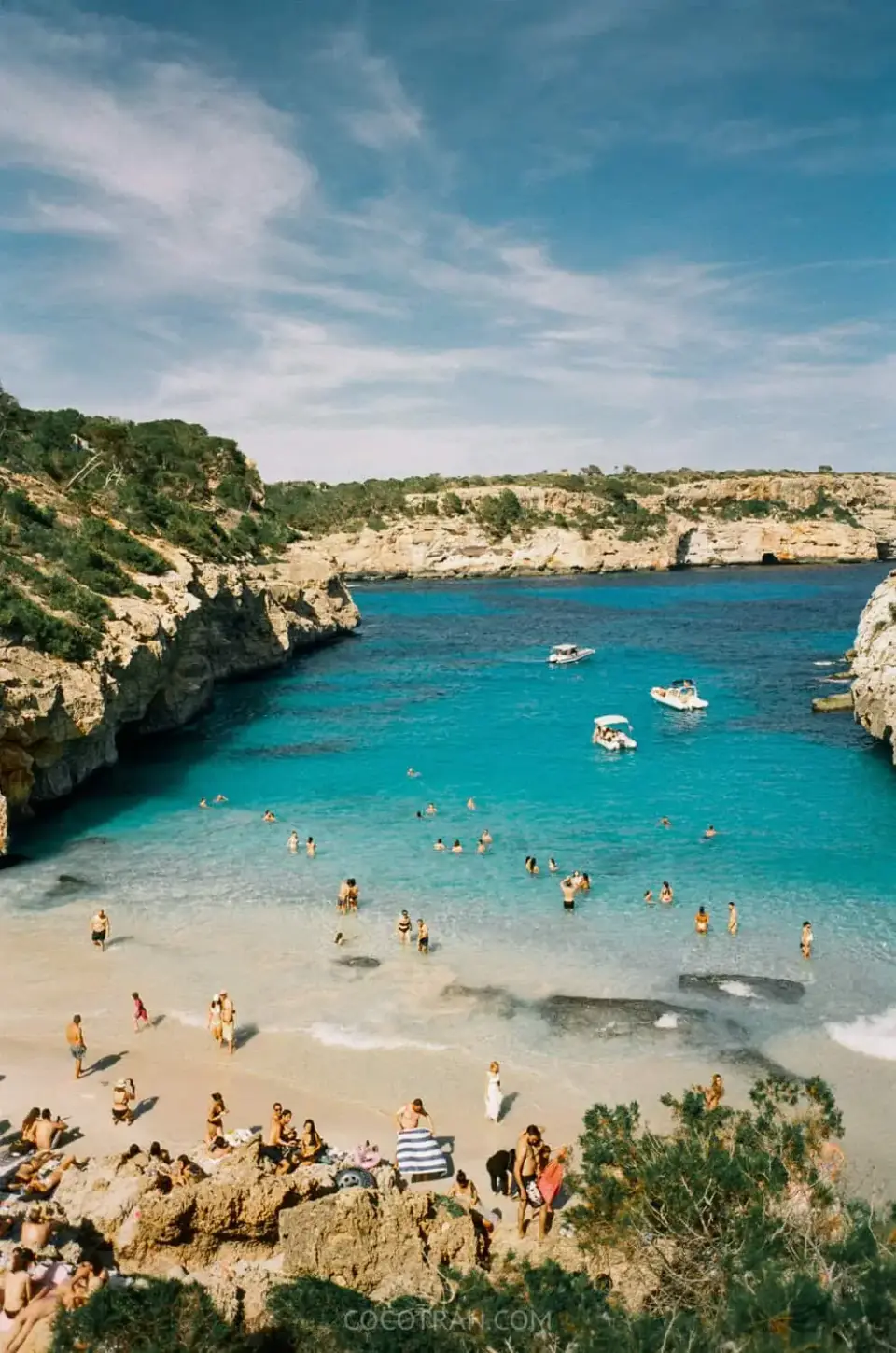
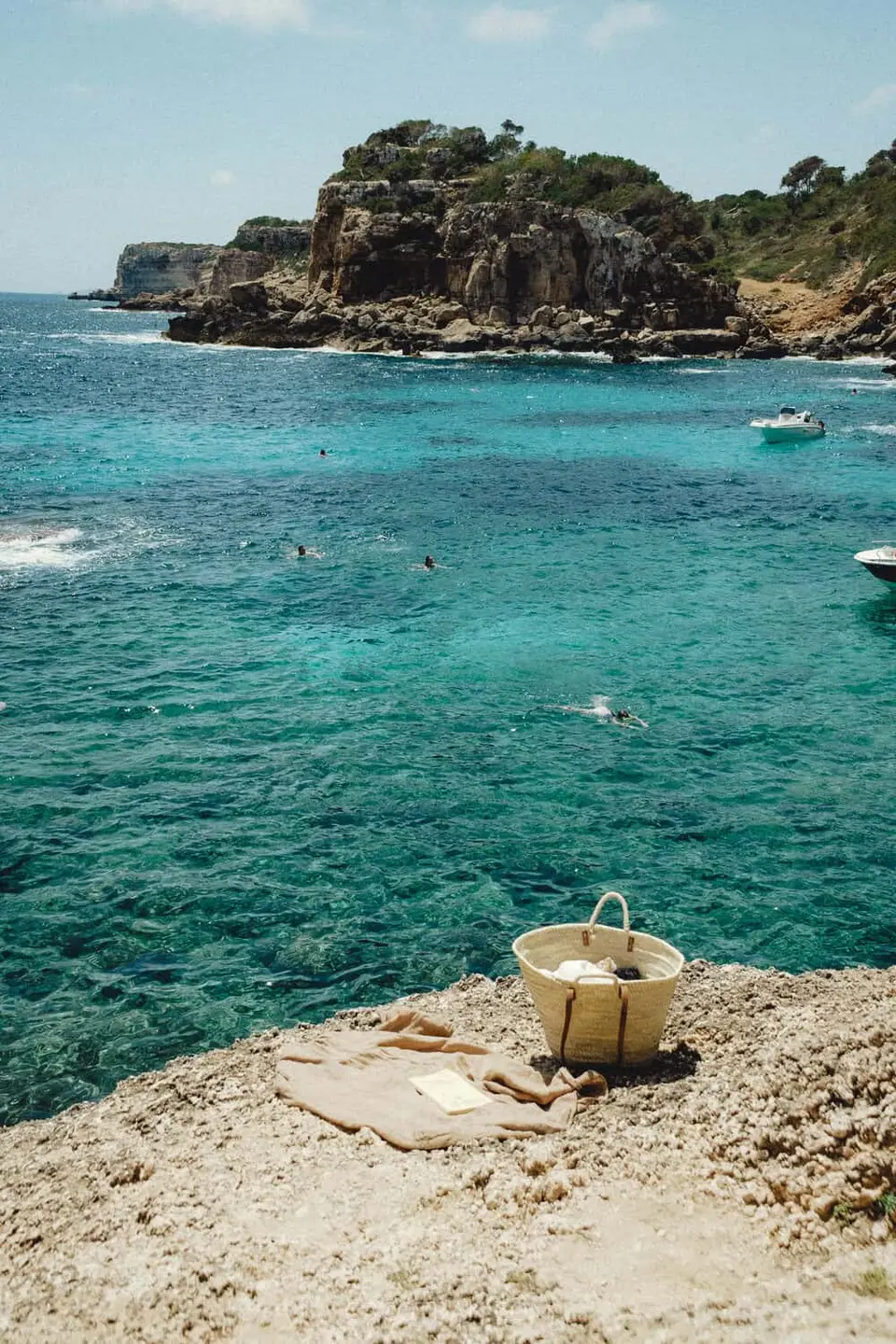
The southeast corner of Mallorca, between Santanyí and Cap de Ses Salines, is cut into dozens of tiny inlets, calós, where the limestone drops straight into water that goes an improbable, swimming-pool turquoise. They're small, most of them have no sand to speak of, and you reach them down rough paths rather than from a car park. That's exactly why they're so good, and also why the famous ones now have a queue down the steps by ten in the morning. So here's which ones I'd bother with, in what order, and when to turn up.
The famous one
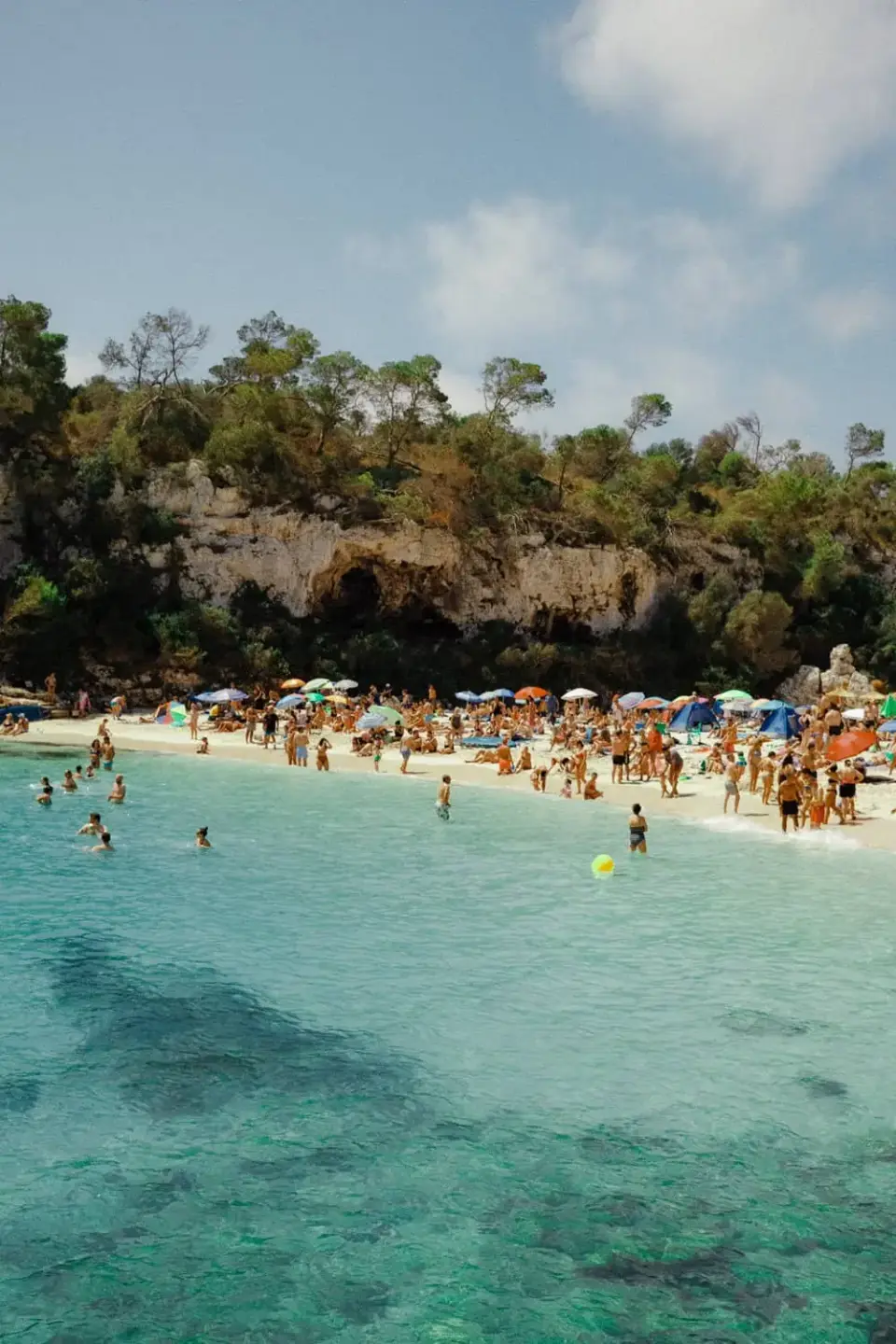
Caló des Moro. This is the photograph that sold Mallorca to the internet: a slot of white sand maybe thirty metres across, with water so clear the boats look like they're floating on air. You reach it down a rough, unmarked scramble from the road, and there's no shade, no bar and no lifeguard. In July it holds several hundred people on a beach that comfortably takes forty, and the residents of Santanyí have made their feelings about this very clear, which I completely understand. Go at eight in the morning, or go in May or October, or honestly, don't go.
The better one, thirty seconds away
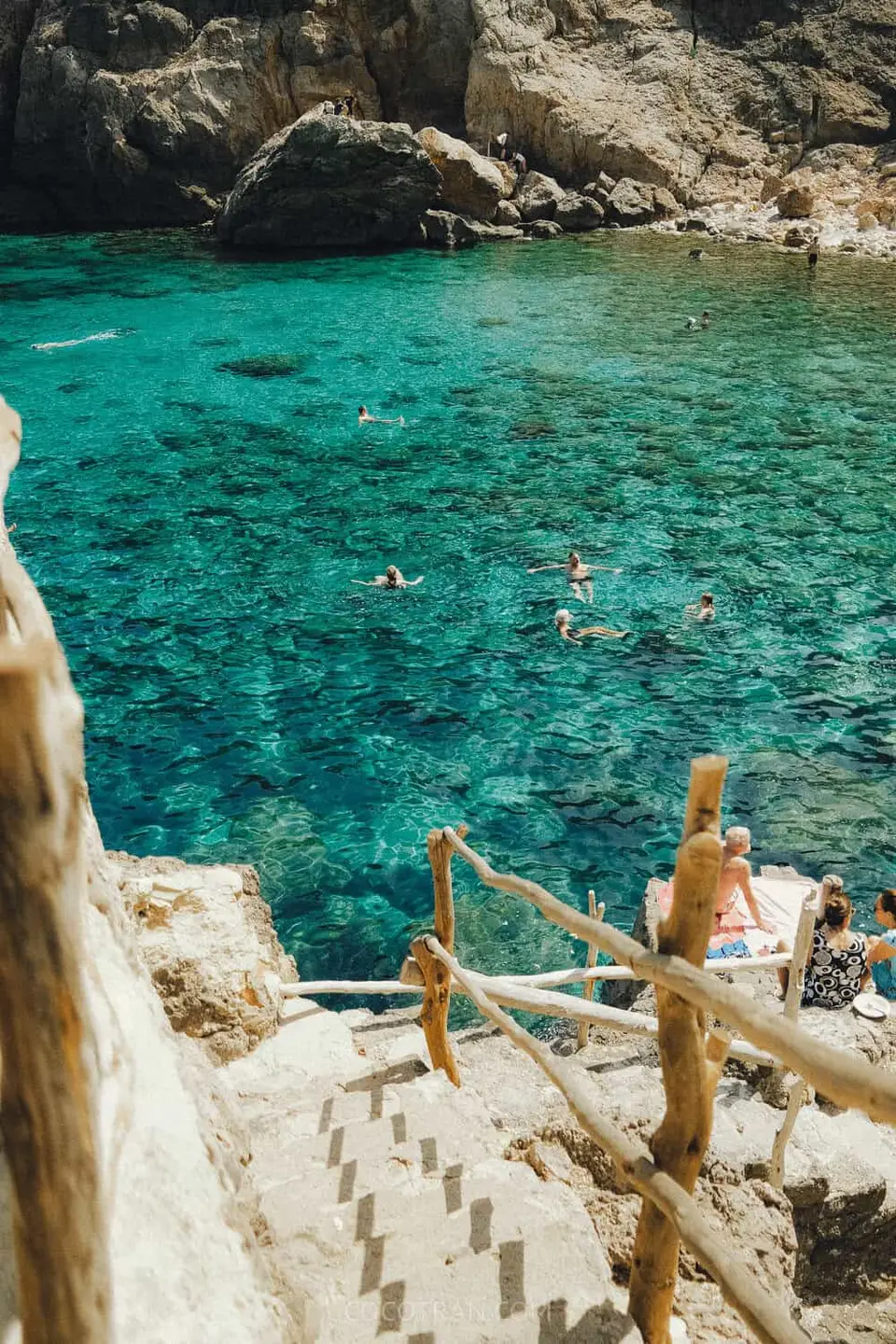
Cala s’Almunia. The next inlet along, and the one I'd actually choose. There's no sand at all; instead you get wooden boat ramps, a handful of whitewashed fishermen’s huts built into the rock, and steps down into deep, clear water. You swim off the stone rather than wading in, which puts off just enough people to keep it civilised. Bring reef shoes, and watch where you leave your towel when a boat comes in.
The one with actual sand
Cala Llombards. Pines, a proper crescent of sand, a small boathouse at one end, a beach bar and, crucially, a car park. This is where I'd send you if you want a whole lazy day rather than a swim and a scramble, or if you have children who need somewhere to put a towel.
The one that isn't for swimming
Cala Figuera. A working fishing village rather than a beach, with boathouses on stilts along a long, narrow inlet and the fleet still going out. Come in the early evening, walk the two arms of the harbour, and eat fish at the top. It's the prettiest hour on this coast, and nobody's in a swimsuit.
The one with the arch
Cala Santanyí, and the walk from it out to Es Pontàs, a natural rock arch standing out of the sea that's famous among climbers as a deep-water solo. It's twenty minutes on a clifftop path, and the view back is the best on this stretch, so do bring your camera.
The one for a full day
Mondragó and S’Amarador. They're inside a natural park, so the development stops at the edge: two linked sandy bays, dunes, a path between them, and enough space to still be pleasant in August. It's the compromise choice that nobody regrets.
And in Palma
The city beaches are fine rather than special. If you're staying in town, skip them and head to Portixol or El Molinar instead. Swim off the rocks where the locals do, then have breakfast on the seafront; it's a better morning than the drive out to anywhere.
The one most people miss
Es Caragól, down near Cap de Ses Salines at the island’s southern tip. It takes a twenty-minute walk from the road through low scrub to reach it, and that walk is the entire reason it stays empty: no bar, no loungers, no shade, just a long pale beach, shallow water and usually a handful of people. Take water, a hat and lunch. It's the closest thing left on Mallorca to having a beach to yourself in August, and that feeling is worth every step.